
he Champions League draw in Nyon often feels like a sterile affair, but when the balls pairing Bayern Munich and Juventus roll out, there's a collective intake of breath. Six meetings between 2013 and 2020 produced 19 goals, two extra-time thrillers。and a penalty shootout that still fuels arguments in Munich beer halls. Their rivalry isn't built on geography or politics—it's a clash of footballing philosophies. Bayern's relentless pressing machine against Juventus's cynical, artful defending. I've watched every minute of those ties, and the pattern is clear: these two sides bring out the best and worst in each other.Take the 2016 round of 16. Bayern led 2-0 after 45 minutes at the Allianz Arena, playing football so crisp it felt like a training drill. Then Juventus scored twice in seven minutes after the break—Mario Mandžukić's header against his former club, then Álvaro Morata's cool finish. The Allianz went silent. Thomas Müller later admitted the team 'panicked.' That's the Juventus effect: they punish complacency with surgical precision. Bayern eventually won 4-2 in extra time, but the match exposed a fragility that Pep Guardiola's sides sometimes hid. Juventus didn't just defend;they counterattacked with the ruthlessness of a team that expected to win.
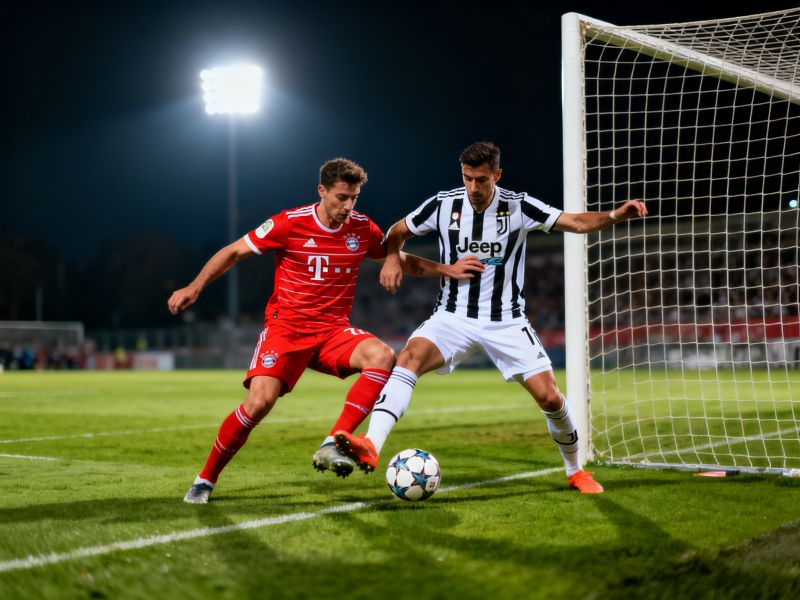
Flip to 2018. Juventus Park in Turin。and Bayern are 2-1 down from the first leg. Cristiano Ronaldo had just joined Juventus, and the hype was suffocating. What happened?Bayern dominated possession but couldn't break through. Juventus sat deep, absorbed pressure, and nearly nicked a goal on the break. The second leg in Munich was a different story—Bayern won 2-1 but needed a late Robert Lewandowski penalty to force extra time, where they eventually prevailed. I remember texting a friend: 'This is what elite football looks like—two teams who know each other's weaknesses intimately.' The Bayern Munich and Juventus fixture never feels like a friendly;it's a chess match where every mistake is fatal.What makes this matchup so compelling is the tactical mirroring. Both clubs have historically relied on strong hierarchies, veteran leadership, and a distrust of flashy individualism. Bayern's 'FC Hollywood' era faded into a ruthless winning machine under Uli Hoeneß and Karl-Heinz Rummenigge. Juventus built their dynasty on Andrea Agnelli's vision and Beppe Marotta's savvy transfers. The result?Two clubs that treat the Champions League as an obsession, not a bonus. When they meet, you see echoes of old battles: Bayern's 2009 humiliation at the hands of Juventus's Claudio Ranieri?No, that never happened—but the point stands. These are clubs that define themselves by European nights。and facing each other is a measuring stick. In 2020, Bayern's 4-1 aggregate win felt like a changing of the guard, but Juventus's decline was temporary. The next collision will be just as tense.
My take: Bayern Munich and Juventus will meet again in a knockout tie within the next three seasons。and it will produce another extra-time classic. Why?Because both clubs are rebuilding—Bayern under Vincent Kompany's new ideas, Juventus with Thiago Motta's tactical revolution. They're at similar stages, both desperate to reclaim European glory. The history between them isn't just a stat;it's a psychological burden and a source of motivation. When the draw is made, neither side will be happy to see the other. That's the mark of a true rivalry. And for neutrals like me, it's the fixture we secretly hope for every February.